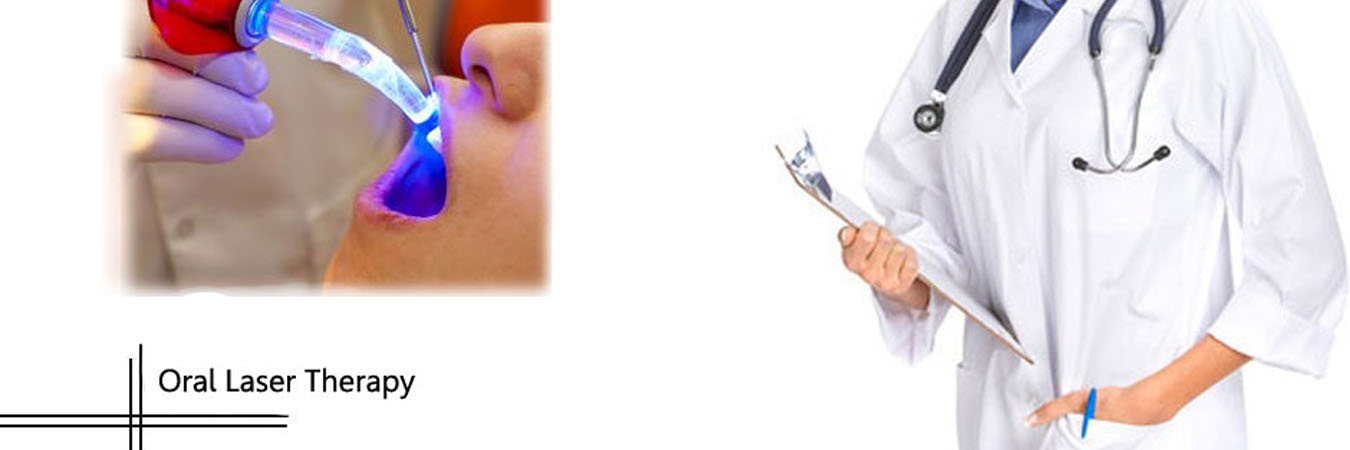
Oral Laser Therapy
The time has come to embrace the routine use of lasers for the treatment of periodontal disease. The diode laser has been shown to be effective and safe for this purpose. If not now, when? Patients need treatment. Laser Assisted Periodontal Therapy is non – invasive. With the diode laser there is a reduced need for systemic or locally applied antimicrobials. This leads to fewer allergic reactions and antibiotic resistance. There is significant proof that the addition of Laser Assisted Periodontal Therapy to conventional scaling and root planing improves outcomes. This is particularly compelling when considering the periodontal health/systemic health link. It is time to open our minds to laser technology and apply the treatment that is in the best interest of our patients. Lasers have been used in dentistry since 1994 to treat a number of dental problems. It is cautiously optimistic about the role of laser technology in the field of dentistry. These lasers are different from the cold lasers used in phototherapy for the relief of headaches, pain, and inflammation.
- Tooth decay. Lasers are used to remove decay within a tooth and prepare the surrounding enamel for receipt of the filling. Lasers are also used to “cure” or harden a filling.
- Gum disease. Lasers are used to reshape gums and remove bacteria duringroot canal procedures.
- Biopsy or lesion removal. Lasers can be used to remove a small piece of tissue called a biopsy) so that it can be examined forcancer. Lasers are also used to remove lesions in the mouth and relieve the pain of canker sores.
- Teeth whitening. Lasers are used to speed up in-office teeth whitening procedures. A peroxide bleaching solution, applied to the tooth surface, is ”activated” by laser energy, which speeds up of the whitening process.
How Do Lasers Work in Dentistry?
All lasers work by delivering energy in the form of light. When used for surgical and dental procedures, the laser acts as a cutting instrument or a vaporizer of tissue that it comes in contact with. When used for “curing” a filling, the laser helps to strengthen the bond between the filling and the tooth. When used in teeth-whitening procedures, the laser acts as a heat source and enhances the effect of tooth-bleaching agents.
What Are the Pros and Cons of Using a Laser in Dentistry?
Pros
Compared to the traditional dental drill, lasers:
- May cause less pain in some instances, so reduces the need for anesthesia
- May reduce anxiety in patients uncomfortable with the use of the dental drill.
- Minimize bleeding and swelling during soft tissue treatments.
- May preserve more healthy tooth during cavity removal
Cons
The disadvantages of lasers are that:
- Lasers can’t be used on teeth with fillings already in place.
- Lasers can’t be used in many commonly performed dental procedures. For example, lasers can’t be used to fill cavities located between teeth, around old fillings, and large cavities that need to be prepared for a crown. In addition, lasers cannot be used to remove defective crowns or silver fillings, or prepare teeth for bridges.
- Traditional drills may still be needed to shape the filling, adjust the bite, and polish the filling even when a laser is used.
- Lasers do not eliminate the need for anesthesia.
- Laser treatment tends to be more expensive — the cost of the laser is much higher than a dental drill.
Dr. Patil proves his dedication to quality general and cosmetic dentistry in his clinic, and beyond, creating lasting health and beauty in smiles. Contact our dental office to schedule your comprehensive consultation with Dr. Patil today.